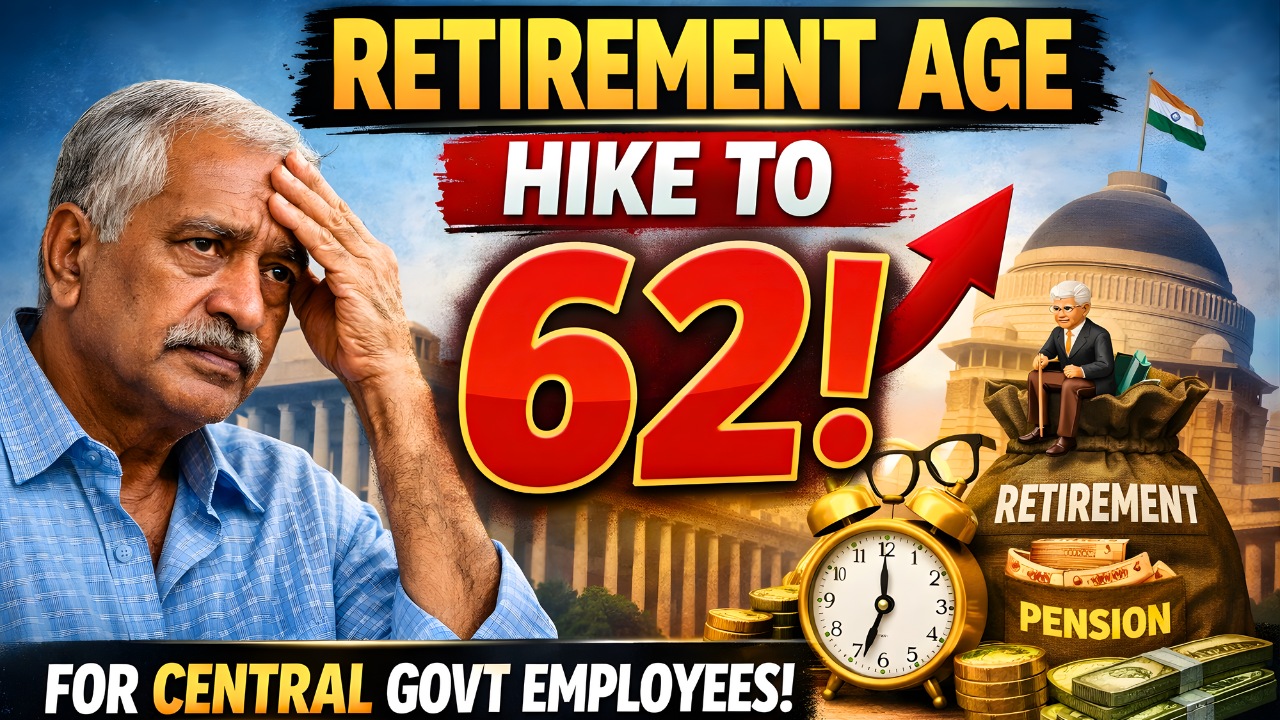
Retirement Age Hike to 62 for Central Government Employees: A major update regarding service rules has sparked widespread discussion among government employees. Reports suggesting an increase in retirement age to 62 years for central government employees have drawn strong attention from working professionals and pension planners. If implemented, this change could significantly impact career planning, pension timelines, and workforce management across departments.
This proposed move is being viewed as part of a broader administrative reform aimed at utilising experienced manpower while balancing pension expenditure and talent retention.
Why Retirement Age Revision Is Being Discussed
The discussion around increasing retirement age is mainly linked to rising life expectancy and improved health conditions among employees. Many employees remain professionally active and productive even after reaching the current retirement threshold.
Another major factor is workforce stability. Retaining experienced employees helps departments maintain continuity in administration and reduces frequent recruitment costs.
Current Retirement Policy and Proposed Change
Central Government Retirement Age Overview
| Category | Current Retirement Age | Proposed Retirement Age |
|---|---|---|
| Central Government Employees | 60 years | 62 years |
| Defence Personnel | Varies by rank | No confirmed change |
| PSU Employees | Depends on organisation | Not uniform |
| Pension Start | After retirement | May be delayed if age increases |
| Service Extension | Limited cases only | May increase if policy approved |
This table explains how the proposal compares with the existing retirement rules.

Who May Benefit From the Retirement Age Increase
If the proposal is approved, most central government employees working in administrative, technical, and support roles may benefit. The extension would allow employees to remain in service for two additional years.
Employees close to retirement may gain extended job security and additional salary income. Younger employees could also benefit through increased promotion opportunities as senior staff remain longer in service structures.
Impact on Salary and Pension Benefits
An increase in retirement age directly affects pension calculations. Employees retiring later will contribute longer to retirement funds and provident schemes. This often leads to higher final pension benefits.
Extended service also means additional salary increments and allowances, which further improve retirement financial security. However, pension payouts may begin later due to delayed retirement age.
Effect on Government Workforce Planning
The proposal could change recruitment patterns in government departments. With employees staying longer in service, new hiring cycles may slow temporarily.

At the same time, departments benefit from experienced professionals who possess institutional knowledge and specialised skills. This may improve administrative efficiency and reduce training costs.
Possible Challenges of Increasing Retirement Age
While the proposal offers several advantages, it also raises concerns. Younger job seekers may face reduced recruitment opportunities if existing employees remain in service longer.
Another concern involves workforce promotion timelines. Junior employees may experience delays in career progression if senior positions remain occupied for extended periods.
Balancing experience retention with employment generation remains a key policy challenge.
Economic and Social Factors Behind the Proposal
Increasing retirement age is also linked to rising life expectancy and improved healthcare facilities. Many professionals remain physically and mentally fit well into their early sixties.

From an economic perspective, extending service reduces immediate pension burden on government finances. It also allows continued contribution to the economy through workforce participation.
Comparison With Retirement Age in Other Sectors
In several private sector organisations, retirement age ranges between 60 and 65 years depending on job roles and company policies. Some sectors already allow flexible retirement options based on performance.
Globally, many countries have gradually increased retirement ages to match longer life expectancy. The proposed change aligns with international employment trends.
What Employees Should Do if Policy Is Implemented
Employees should review long term career and financial planning strategies. Extended service means delayed pension start but higher overall retirement corpus.
Planning investments, savings, and insurance coverage according to the revised retirement timeline can help maximise financial security. Employees nearing retirement may need to revise post retirement plans accordingly.

Will the Retirement Age Increase Apply to All Government Staff
The proposal is primarily focused on central government civilian employees. Any final implementation may include specific eligibility conditions or phased introduction.
Different categories such as defence services, autonomous bodies, and public sector undertakings may follow separate retirement policies based on organisational requirements.
How the Proposal May Affect Pension Funds and Government Expenditure
Extending retirement age can temporarily reduce pension liabilities because employees continue working longer before drawing benefits. This allows pension funds to grow through additional contributions.
At the same time, government salary expenditure may increase because experienced employees typically earn higher pay scales. The policy must balance financial sustainability with workforce stability.
Future Outlook for Retirement Policy in India
Retirement policies are expected to evolve as demographic patterns change. With increasing lifespan and changing employment trends, governments may continue reviewing retirement frameworks.

Flexible retirement models, phased retirement options, and skill based extensions may become more common in the future.
Final Thoughts
The proposal to increase retirement age to 62 for central government employees reflects changing workforce realities and economic priorities. If approved, it could provide financial stability for employees, strengthen administrative efficiency, and reduce immediate pension pressure.
However, the final impact will depend on implementation details and balancing employment opportunities for younger generations. Government employees should stay updated with official announcements and prepare for possible adjustments in career and retirement planning.