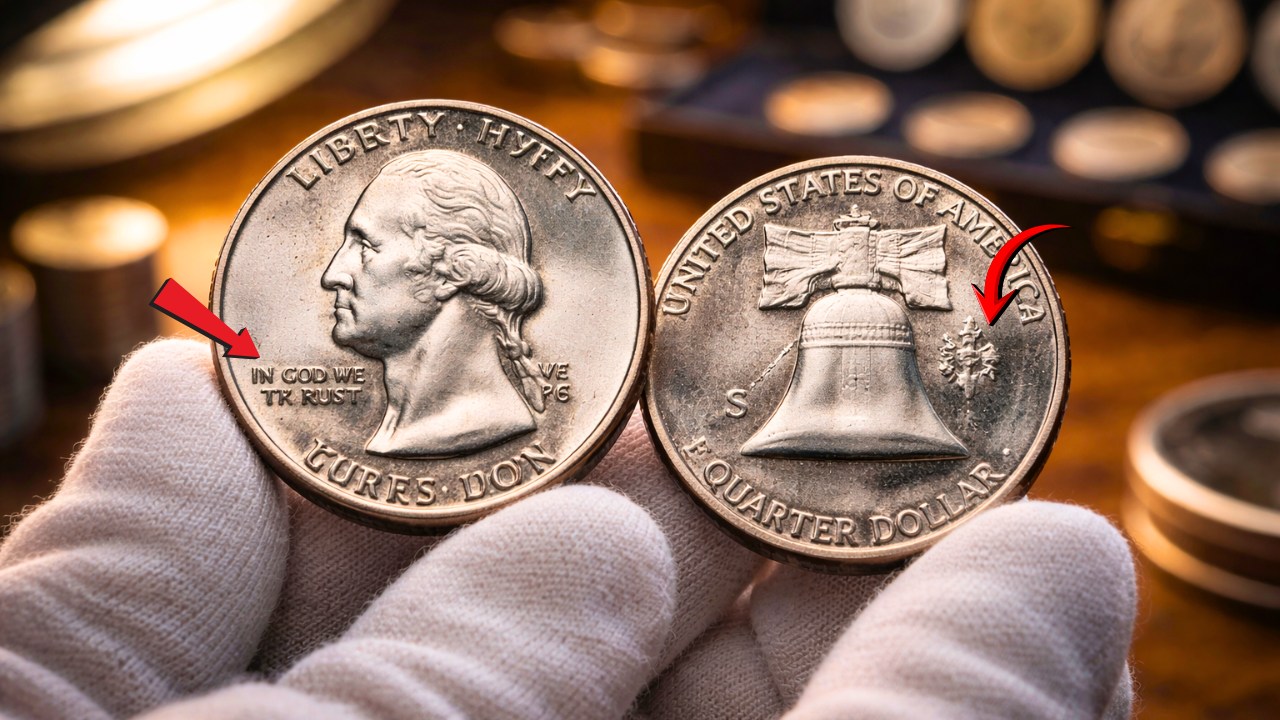
Rare Bicentennial Quarter Worth $3.9M: A simple quarter sitting in a wallet or old coin jar could be worth more than a luxury mansion. That idea may sound unbelievable, yet it is exactly why collectors continue to hunt for rare US coins. One coin that has sparked huge curiosity is the Bicentennial Quarter, with reports of an ultra rare version valued as high as $3.9 million.
Issued to celebrate America’s 200th anniversary, the Bicentennial Quarter is familiar to almost everyone. Millions were minted and widely circulated. Still, a tiny number of extraordinary examples stand apart, turning an everyday coin into a potential life changing discovery.
Why the Bicentennial Quarter Attracts So Much Attention
The Bicentennial Quarter was released in 1975 and 1976 to honor the nation’s bicentennial celebration. Unlike regular quarters, it features a colonial drummer on the reverse and the dual date 1776 to 1976 on the obverse.
Most of these quarters are common and worth face value. What makes collectors excited is that a few special strikes, errors, and experimental versions escaped the minting process. These rare coins are the ones capable of reaching staggering prices.
Overview Table of Rare Bicentennial Quarter Values
| Bicentennial Quarter Type | Key Feature | Estimated Value |
|---|---|---|
| Experimental Strike | Struck on wrong planchet | Up to $3.9 million |
| Silver Proof Quarter | High grade certified proof | $5,000 to $25,000 |
| Doubled Die Error | Visible doubling | $2,000 to $50,000 |
| Off Metal Error | Wrong metal composition | $10,000 to $100,000 |
| High Grade MS68+ | Exceptional condition | $3,000 to $20,000 |
These values depend heavily on condition, rarity, and professional certification.
The $3.9 Million Bicentennial Quarter Explained
The Bicentennial Quarter linked to the $3.9 million valuation is believed to be an experimental or transitional strike. During the mid 1970s, the US Mint tested different metal compositions and striking processes.

In extremely rare cases, quarters were struck on incorrect planchets or experimental metals that were never meant for public release. These coins differ in weight, composition, and sometimes color, making them instantly appealing to advanced collectors.
Only a handful of such examples are known to exist, which explains why prices can reach multi million dollar levels when one appears on the market.
How to Identify a Potentially Rare Bicentennial Quarter
The first step is to check the date. A genuine Bicentennial Quarter must show 1776 to 1976 on the front. Next, examine the reverse design with the drummer and torch.
Weight is a major clue. Standard copper nickel quarters weigh about 5.67 grams. Any significant difference may indicate an off metal strike. Color can also offer hints, as silver or unusual tones suggest something out of the ordinary.
Magnets can help rule out steel based fakes. A genuine rare quarter will not stick to a magnet unless it was struck on an incorrect steel planchet.

Silver Bicentennial Quarters Versus Regular Issues
Not all Bicentennial Quarters were made equal. Some were struck in silver for collector sets and were never intended for circulation. These silver versions are heavier and have a brighter, more reflective appearance.
While silver Bicentennial Quarters are valuable, they are not the same as the $3.9 million rarity. Still, high grade silver proofs can sell for thousands, especially when certified and preserved in pristine condition.
Error Coins That Increase Value Dramatically
Mint errors are a major reason why some Bicentennial Quarters become highly valuable. Doubled die errors show noticeable doubling on letters or numbers. Off center strikes create unusual visual appeal.
Wrong planchet errors occur when a quarter is struck on a blank meant for another coin. These mistakes are rare and highly sought after, particularly when authenticated.
Error coins are often overlooked by casual owners, making them one of the most exciting categories for treasure hunters.

Why Condition Matters More Than Most People Think
Condition plays a critical role in value. A rare quarter with heavy wear may still be valuable, but pristine examples can be worth exponentially more.
Coins graded MS68 or higher are exceptionally rare. These coins show nearly perfect surfaces, sharp details, and minimal contact marks. Collectors pay strong premiums for such quality.
Professional grading is often the difference between a curiosity and a confirmed high value collectible.
How to Check Your Pocket Change Safely
Start by setting aside all Bicentennial Quarters you find. Examine them under good lighting and use a scale if possible. Look closely at edges, color, and strike quality.
Avoid cleaning the coin under any circumstances. Cleaning can permanently reduce value, even on a genuine rarity. Natural surfaces are always preferred by collectors.
If something looks unusual, store the coin carefully and seek expert evaluation.
Getting Professional Authentication
Any Bicentennial Quarter suspected to be rare should be authenticated by a professional grading service. Certification confirms whether the coin is genuine and identifies its grade and error type.
High value coins without certification are difficult to sell at full market value. Authentication protects both owners and buyers and adds credibility to extraordinary price claims.
Collector Trends Driving Bicentennial Quarter Values in 2026
Interest in rare US coins has surged as collectors look for tangible assets with historical appeal. Bicentennial coins benefit from nostalgia, national pride, and wide public recognition.
Social media and online auctions have increased awareness, leading more people to re examine old collections. This renewed attention continues to support strong demand for rare varieties and errors.

Ultra rare pieces remain the most desirable, especially those with clear documentation and certification.
Common Myths About Bicentennial Quarters
Many people believe all Bicentennial Quarters are valuable. In reality, most are worth only face value. Rarity depends on errors, metal composition, and condition.
Another myth is that shine equals value. Polished or cleaned coins often lose collector appeal. Original surfaces are always more valuable.
Understanding these misconceptions helps avoid disappointment and costly mistakes.
Final Thoughts
The idea that a Rare Bicentennial Quarter Worth $3.9M could be hiding in plain sight is what keeps collectors searching. While such coins are extraordinarily rare, history proves they exist.
Careful inspection, patience, and professional authentication are essential. Even if you never find a million dollar coin, learning what to look for can turn everyday pocket change into an exciting and rewarding hobby.