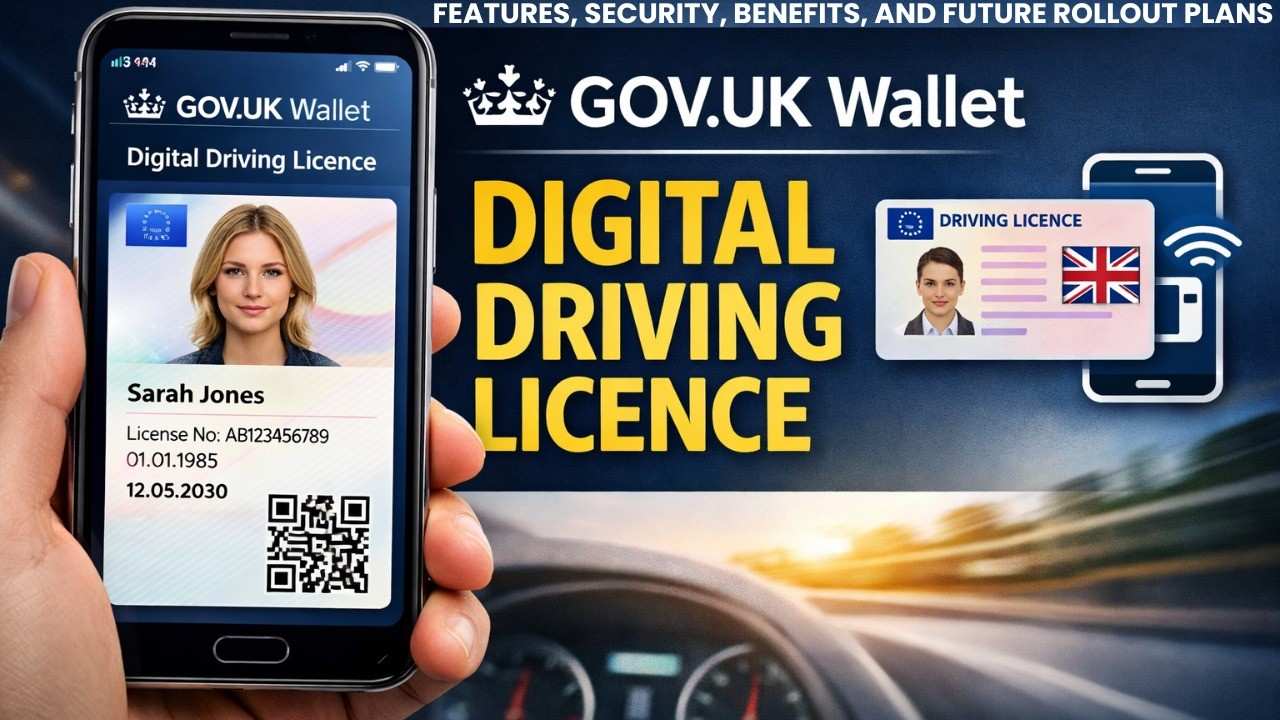
GOV.UK Wallet Digital Driving Licence: The GOV.UK Wallet digital driving licence is a new step in the United Kingdom’s move toward secure digital identity services. It allows drivers to store an official version of their licence on a smartphone. This digital option aims to make identity checks faster, easier, and more convenient while maintaining strong security standards across government platforms.
The system is currently under testing and is expected to expand after trial phases. It will work through the GOV.UK One Login service and is designed to complement physical licences, not replace them. The initiative supports wider digital transformation plans and aims to improve access to public services with verified identity tools.
GOV.UK Wallet Digital Driving Licence Explained
The GOV.UK Wallet is a mobile-based platform designed to hold official government documents in digital form. The digital driving licence will be one of the key credentials stored securely on a smartphone. It will contain the same information as a physical photocard, including name, photo, and driving entitlements.
This digital version can be shown when proof of identity or age is required. It is intended to work in situations such as police checks, identity verification, and service access. The goal is to make document access quicker and reduce the need to carry physical cards.

Purpose Behind The UK Digital Licence Initiative
The UK government is developing this system to simplify identity verification and improve access to services. With increasing digital adoption, many services require fast and reliable ID checks. A digital licence helps people confirm their identity in a secure and efficient way.
The initiative also aims to reduce fraud and modernize public service systems. Digital verification can limit fake documents and improve trust. It supports a broader plan to create a connected digital identity ecosystem for government services.
GOV.UK Wallet Digital Driving Licence: Overview Table
| Key Detail | Information |
|---|---|
| Project Name | GOV.UK Wallet Digital Driving Licence |
| Country | United Kingdom |
| Launch Status | Pilot and testing phase |
| Expected Access | After successful public rollout |
| Linked Platform | GOV.UK One Login |
| Primary Use | Identity and driving entitlement proof |
| Physical Licence | Still valid and not replaced |
| Security | Biometric and device-level protection |
| Initial Trials | Government and DVLA testing |
| Future Scope | Expansion to more digital documents |
How The Digital Driving Licence Works In Practice
The digital licence will be stored in the GOV.UK Wallet connected to a verified One Login account. Once identity is confirmed, users can access their licence on their phone. It will display essential information clearly and securely when needed.

Authorities and services will be able to accept the digital version for identity checks. The system is designed to work quickly while protecting user data. It can be used in various everyday situations where proof of identity or driving eligibility is required.
Security Features Protecting User Information
Security is a major focus of the GOV.UK Wallet system. The digital licence will be protected by phone security features such as fingerprint recognition, face unlock, and passcodes. These measures help prevent unauthorized access to personal information.
The platform will also rely on verified identity through GOV.UK One Login. Data is expected to be stored securely and shared only when required. This helps reduce the risk of identity fraud and improves confidence in digital documents.

Benefits Of Carrying A Digital Licence On Mobile Devices
A digital licence removes the need to carry a physical card everywhere. Users can quickly show their details from their phone when needed. This makes daily activities more convenient and reduces the chance of losing important documents.
The system also supports faster verification processes. Service providers can confirm identity more efficiently using official digital records. This can improve access to services and make administrative tasks easier for both users and authorities.
Current Trials And Development Progress In The UK
The GOV.UK Wallet is currently being tested in controlled trial environments. Early testing has included government staff and specific user groups. These trials help identify technical improvements and ensure the system works smoothly.

The digital driving licence is one of the main documents being prepared for wider release. The testing phase is important for security checks and system stability. Public availability is expected after successful completion of these early trials.
Difference Between Physical And Digital Driving Licences
The digital version contains the same details as the physical photocard licence. It is designed to work alongside the traditional card, not replace it. Drivers will still be able to use their plastic licence as usual.
The digital format simply offers an additional option. It allows people to access their licence through their phone whenever needed. This adds flexibility while keeping the original document valid and accepted.

Future Expansion Of GOV.UK Wallet Services
The GOV.UK Wallet is planned to support more government-issued documents over time. After the digital driving licence, other credentials may be added to the platform. This could include identity cards or verification documents.
The long-term goal is to create a secure digital storage space for official records. This will help people access important documents quickly and safely. It also supports the UK’s wider plan to improve digital public services.
Public Impact And Adoption Of Digital Identity Systems
The introduction of digital licences may change how people manage official documents. Many users may prefer the convenience of mobile access. It can reduce paperwork and simplify everyday identification tasks.
Wider adoption will depend on public trust and system reliability. As more people become comfortable with digital identity tools, usage is expected to grow. This shift represents an important step in the digital transformation of public services.