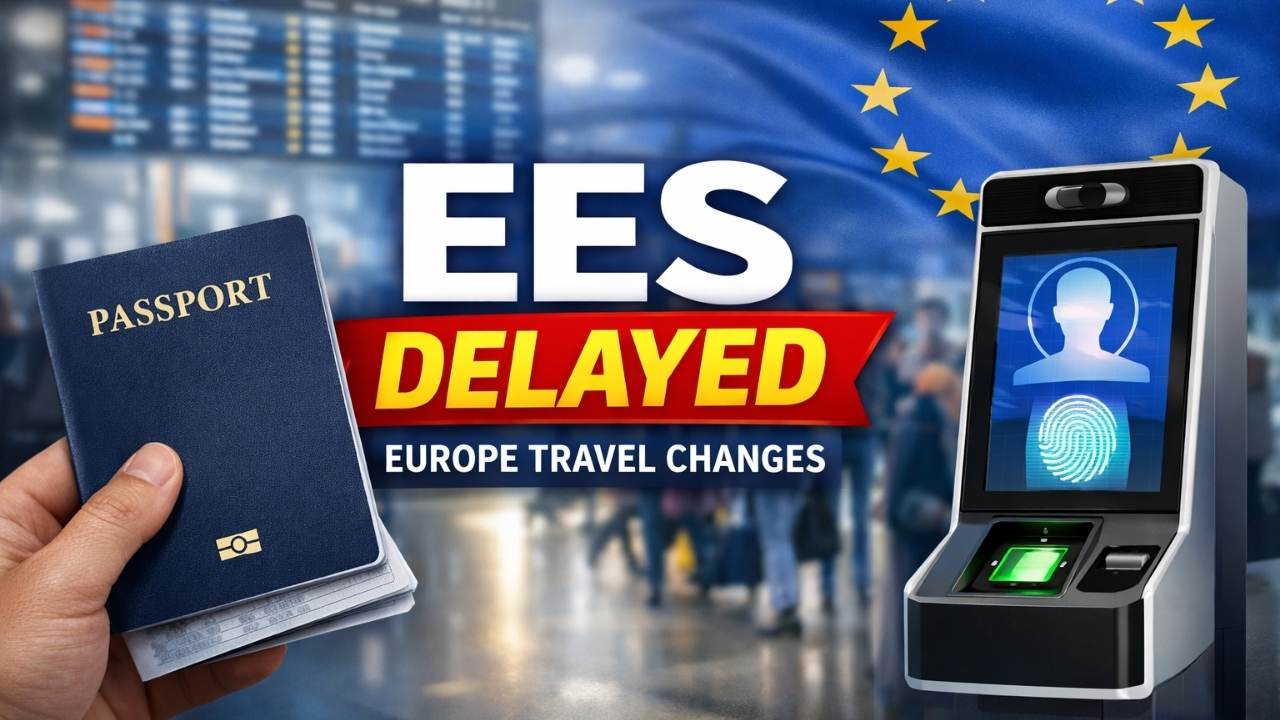
EES Delayed: Europe is preparing to change how travelers enter and leave its borders through a digital monitoring system called the Entry/Exit System. This system will replace passport stamps with biometric data collection to improve security and track short-term visitors. However, the rollout has faced delays due to technical challenges and concerns about long waiting times.
These new rules will affect millions of non-EU visitors each year, including tourists from countries that require visas. Alongside the Entry/Exit System, another online travel authorization called ETIAS is expected to launch later. Together, these changes will reshape how people travel to Europe in the coming years.
Understanding The Entry Exit System And Its Purpose
The Entry/Exit System is designed to record the arrival and departure of non-EU visitors entering the Schengen Area. It will collect fingerprints, facial images, and passport data to create a digital record. This replaces manual passport stamping that has been used for decades across European borders.
The system aims to improve border control efficiency and identify people who stay longer than allowed. Each year, millions of travelers visit Europe, and officials believe digital tracking will help manage around 700 million border crossings annually across the region.

Reasons Behind The Delay In Implementation
The European Union planned to introduce the system earlier, but technical preparations at airports and land borders were not complete. Authorities worried about long queues, slow processing, and infrastructure gaps at busy entry points, especially during peak travel seasons.
Reports suggested the full rollout is now expected around September 2026. The delay gives countries more time to install biometric kiosks, train border staff, and test systems. This ensures smoother operations when millions of travelers begin using the new process.
EES Delayed: Overview Table
| Key Aspect | Details |
|---|---|
| System Name | Entry/Exit System |
| Planned Full Launch | September 2026 |
| Region Covered | Schengen Area countries |
| Data Collected | Fingerprints, facial scan, passport data |
| Target Travelers | Non-EU short-term visitors |
| Annual Border Crossings | Around 700 million |
| Current Method Replaced | Passport stamping |
| Main Goal | Track entries, exits, and overstays |
| Related System | ETIAS travel authorization |
| Expected ETIAS Fee | Around €20 |
How Biometric Data Will Be Collected At Borders
When travelers first arrive after the system begins, they will need to register their fingerprints and have a facial image captured. This information will be stored in a secure digital database linked to their passport details.

After the initial registration, future trips should be faster. Travelers will only need to verify their identity at automated gates, which is expected to reduce manual checks and improve processing time at major airports.
Impact On Tourists And Short Term Visitors
The new rules will mainly affect visitors staying in Europe for up to 90 days within a 180-day period. Tourists, business travelers, and short-term visitors from non-EU countries will all be included in the system.
Authorities estimate the system will help detect overstays more accurately. Around 10 percent of irregular migration cases in Europe are linked to people staying beyond permitted periods, making monitoring an important goal.

Connection Between EES And ETIAS Travel Authorization
The Entry/Exit System works together with ETIAS, a separate digital travel approval system planned for later introduction. ETIAS will require visa-free travelers to apply online before visiting Europe.
The authorization is expected to cost about €20 and remain valid for up to three years. It will allow multiple short visits, and most applications are expected to be approved within minutes, improving travel planning.
Expected Benefits For Border Security And Efficiency
European authorities believe digital entry records will strengthen border security and reduce identity fraud. By storing biometric data, the system can quickly confirm a person’s identity and travel history.

Automated gates may also speed up travel once the system stabilizes. After initial adjustments, processing time at borders could be reduced, making the experience smoother for frequent travelers.
Challenges Faced During Early Testing Phases
Early pilot testing showed that some airports were not ready for high passenger volumes. Installing biometric kiosks, updating software, and training staff took longer than expected in several countries.
Concerns about long queues and technical errors pushed officials to delay full implementation. Authorities want to avoid travel disruptions during busy periods when millions of tourists arrive across Europe.

What Travelers Should Prepare Before Visiting Europe
Travelers should ensure their passports are valid and ready for biometric registration at entry points. First-time users may spend a few extra minutes completing fingerprint and photo scans at border checkpoints.
Planning extra time at airports during the early rollout phase is advisable. While the process will eventually become faster, the transition period may bring delays as systems are adjusted and improved.
Long Term Changes In European Travel Experience
Over time, the digital border system is expected to make travel more organized and secure. Automated records will replace manual stamps, and travelers will have clear tracking of entry and exit dates.
By combining biometric identification and online travel authorization, Europe aims to modernize border control. These changes will affect millions of visitors every year and shape how international travel works across the continent.