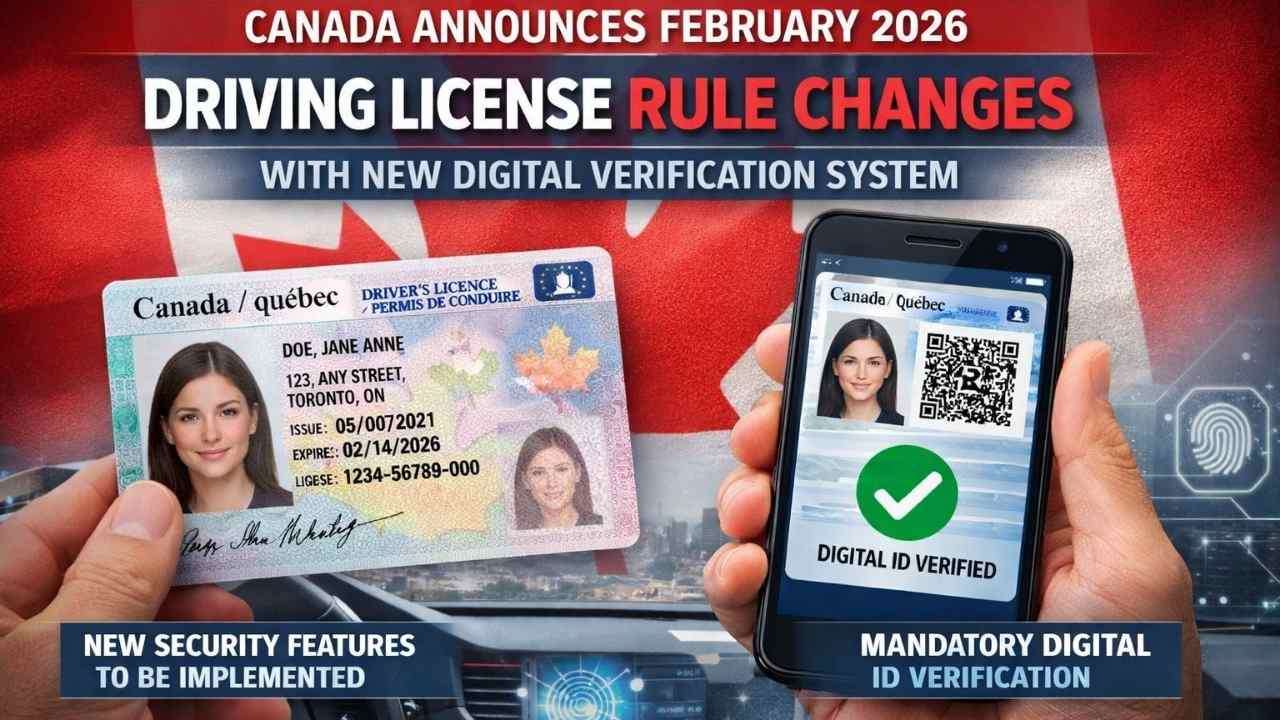
Canada February 2026 Driving License Rule Changes: Canada has confirmed that new driving license rule changes will begin from February 2026. These updates are designed to improve safety, modernize verification systems, and reduce fraud. Authorities aim to make licensing rules clearer and more consistent across provinces while introducing new digital tools for drivers.
The new rules will affect both new applicants and existing license holders. Changes include digital licenses, stronger identity checks, and updated renewal processes. Officials believe these steps will help improve road safety, strengthen record keeping, and make the system easier to manage across Canada.
Key Changes Coming Into Effect
The new rules will begin in February 2026 and focus on improving safety, security, and efficiency. Authorities are introducing digital verification systems and stricter checks to ensure that all drivers meet updated standards.
Many provinces will adjust their licensing systems to match the national direction. These changes are expected to impact millions of drivers across Canada over the next few years as licenses are renewed.

Digital Driving License Introduction
Canada plans to introduce a digital driving license that can be stored on a mobile device. This system will allow drivers to show their license through a secure app, making verification quicker and easier during checks.
Officials say the digital system will help reduce fake licenses and identity fraud. Physical cards will still be valid, but digital options will become more common for everyday use.
Canada February 2026 Driving License Rule Changes Overview
| Key Detail | Information |
|---|---|
| Start Date | February 2026 |
| Main Goal | Improve safety and reduce fraud |
| Digital License | Mobile-based digital ID option |
| Identity Checks | Stronger biometric verification |
| Validity Period | Around 5 years in many areas |
| Affected Drivers | New and existing license holders |
| Safety Focus | Stricter monitoring and checks |
| Record System | Better coordination across provinces |
Stronger Identity Verification Measures
The new rules will include stronger identity checks using modern technology. Some provinces may introduce facial verification or updated documentation requirements during license renewal.

These steps aim to prevent fake identities and ensure that licenses are issued to the right individuals. It also helps authorities maintain accurate and updated driver records.
Standardized Licensing System Across Provinces
Canada is working to bring more consistency to licensing rules across provinces. This includes similar testing methods, renewal processes, and documentation requirements.
A more unified system will help drivers move between provinces without confusion. It will also make it easier for authorities to share information and maintain records.

Updated License Validity Period
Many provinces are expected to move toward a standard license validity period of about five years. This will help keep driver information updated more regularly.
Regular renewals allow authorities to confirm identity, update photos, and review driver records. This helps improve safety and ensures all details remain current.
Impact On New Drivers
New drivers may see changes in testing methods and documentation requirements. Training standards may also be reviewed to ensure drivers are fully prepared for the road.

These updates aim to build stronger driving habits from the beginning. Authorities believe better training and checks will help reduce accidents involving new drivers.
Changes For Existing License Holders
Current license holders will not need to replace their licenses immediately. Most changes will apply when drivers renew their licenses after expiry.
During renewal, drivers may be asked to provide updated identification or complete verification steps. This gradual approach will help make the transition smoother for millions of people.

Focus On Road Safety Improvements
Road safety is one of the main reasons behind the rule changes. Authorities want to reduce accidents and encourage responsible driving through stronger monitoring systems.
Improved record sharing between provinces may help track violations more effectively. This can lead to better enforcement and safer roads for everyone.
Future Plans And Long Term Benefits
The new system is expected to support digital growth and better public services in the future. With digital licenses and improved records, services will become faster and more efficient.
Officials believe these changes will reduce fraud, improve safety, and make licensing easier to manage. Over time, the new rules may create a more modern and secure driving system across Canada.