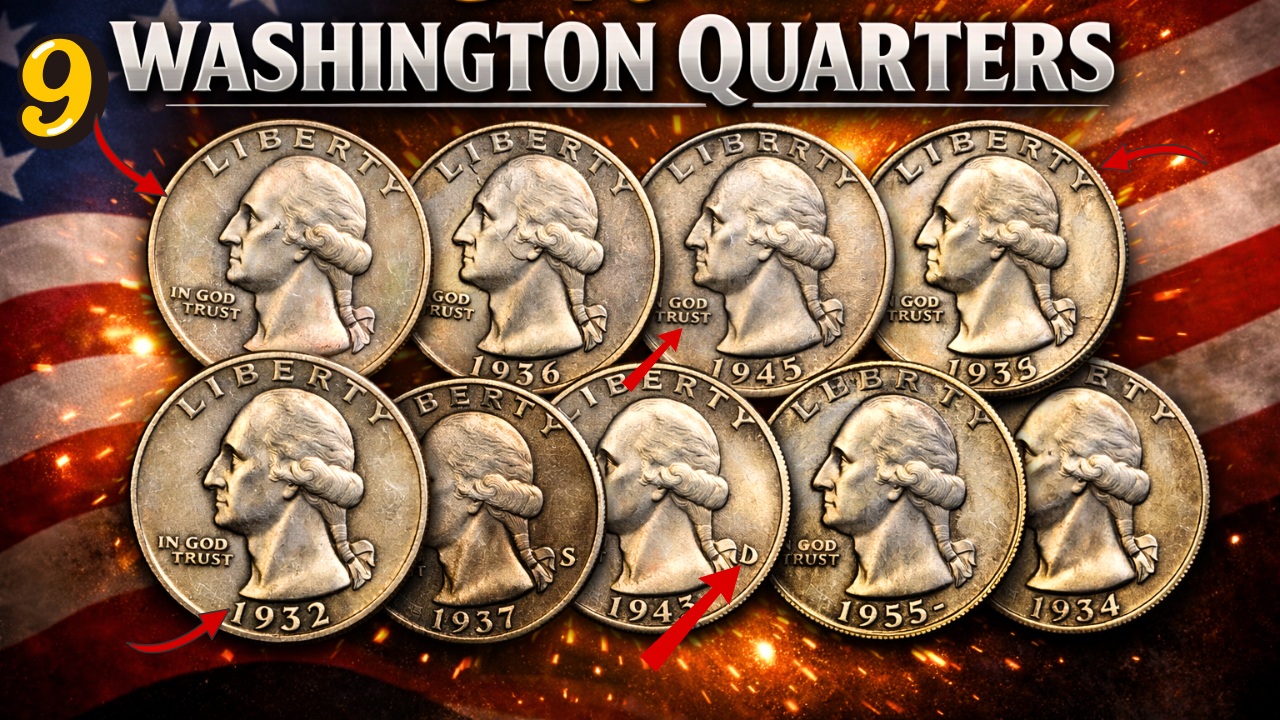
9 Rare Washington Quarters Worth $50,700: Washington quarters have long fascinated collectors due to their history, beauty, and hidden value. Some rare editions have sold for thousands of dollars. Understanding which coins are valuable can help collectors make smarter decisions when searching through old collections.
Certain dates, mint marks, and errors make some Washington quarters extremely desirable. With proper identification and attention to detail, collectors may discover coins worth far more than face value. This guide highlights key information to help recognize valuable quarters in 2026.
History Of Washington Quarter Collecting
Washington quarters were first introduced in 1932 to honor George Washington. Over time, many variations and minting changes created valuable collectibles. Some early releases had low mintages, making them especially rare and desirable today.
Collectors began paying close attention to mint marks and production errors. As interest grew, certain quarters gained strong demand. Their value continues to increase as fewer high-quality examples remain available.

Key Dates That Hold Strong Value
Some Washington quarters are valuable because of limited production years. Coins from 1932, especially those from Denver and San Francisco, are among the most sought after by collectors.
Other important dates include coins from the 1940s and 1950s with special features. Finding these quarters in good condition can make a big difference in their overall value and collectability.
Overview of 9 Rare Washington Quarters Worth $50,700
| Quarter Type | Key Feature | Approximate Value Range | What To Check |
|---|---|---|---|
| 1932-D Quarter | Low mintage | High collector demand | Denver mint mark |
| 1932-S Quarter | Rare production | Valuable in all grades | San Francisco mark |
| 1943 Doubled Die | Lettering error | Premium pricing | Doubling on front |
| 1950-D/S Quarter | Overmintmark error | Strong collector interest | Overlapping marks |
| 1955 Doubled Die | Reverse design error | High value in fine condition | Text doubling |
| 1964-D Silver | Silver content | Valuable in mint state | Shine and detail |
| 1970-S Error | Wrong planchet | Very rare issue | Weight and color |
| 1983-P Quarter | Low saved supply | Higher in uncirculated | Sharp details |
| 1999 Error Quarter | Die crack variety | Popular modern collectible | Line near horse |
| High Grade Examples | Excellent condition | Increased value | Minimal wear |
Identifying Mint Marks Correctly
Mint marks show where a quarter was produced. They are small letters placed on the coin’s reverse or obverse, depending on the year. These marks help collectors determine rarity and value.
Carefully examine coins using a magnifying glass. A small letter like D, S, or P can greatly affect a quarter’s worth. Certain mint marks are known for limited production and higher demand.
Understanding Coin Condition Importance
Condition plays a major role in determining a coin’s value. A well-preserved quarter can be worth much more than the same coin with heavy wear and damage.
Collectors often look for coins with strong shine and sharp details. Scratches, fading, and dull surfaces usually reduce value. Proper storage helps maintain condition over time.

Popular Error Coins To Watch
Error coins are created during the minting process. These mistakes can include doubled designs, incorrect metal use, or overlapping mint marks. Many collectors actively search for such rare variations.
These errors make coins unique and more valuable. Even small design flaws can attract attention. Finding a clear error can greatly increase a quarter’s appeal and market price.
Silver Content And Its Impact
Older Washington quarters, especially those made before 1965, contain silver. This adds to their value beyond simple collector interest. Silver coins are often saved and traded.

Collectors check weight and appearance to identify silver coins. A brighter tone and heavier feel can indicate silver content. These coins are often worth more than modern ones.
Modern Quarters With Rising Interest
Some newer quarters have also gained popularity. Special state designs and rare production errors can make them valuable. Even coins from recent decades can attract strong interest.
Collectors pay attention to unique patterns and rare defects. Over time, these coins may become harder to find. Their value often increases as demand grows.
Tips For Safe Coin Storage
Proper storage helps protect coins from damage. Exposure to moisture and air can reduce quality. Keeping coins in protective holders helps preserve their condition.
Avoid cleaning coins, as it may lower their value. Store them in cool, dry places to prevent wear. Safe storage ensures coins remain valuable for years.
How Collectors Evaluate Market Value
Collectors study rarity, condition, and demand to estimate value. Auction results and expert grading also help determine worth. Even similar coins can have different prices.
Learning about the market helps collectors make better decisions. Comparing coins and researching trends can guide buying and selling choices. Knowledge improves the chances of finding valuable pieces.