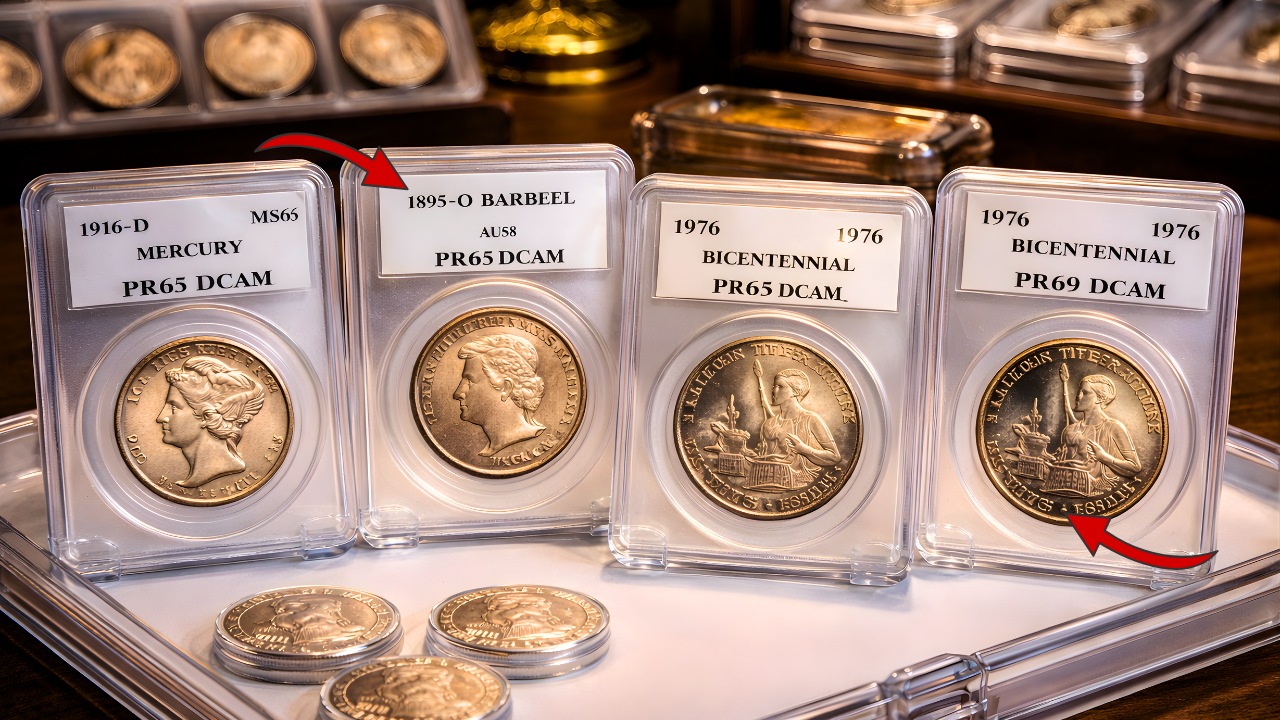
Rare Dimes and 1976 Bicentennial Quarters: Coin collecting has become one of the most exciting hobbies for history lovers and investors alike. Some ordinary looking coins have sold for thousands or even millions of dollars due to rarity, minting errors, and historical significance. Among the most searched collectible coins are rare dimes and the 1976 Bicentennial quarters, both of which have gained major attention in collector markets.
Why Certain U.S. Coins Become Extremely Valuable
The value of collectible coins depends mainly on rarity, historical importance, and minting mistakes. Coins produced in limited numbers or with production errors often attract strong collector demand.
Another important factor is coin condition. Coins that remain well preserved with clear designs and minimal wear usually receive higher grading scores, which increases their market value.
Rare Dimes That Have Reached Exceptional Value
| Dime Year and Type | Unique Feature | Estimated Collector Value |
|---|---|---|
| 1894 S Barber Dime | Extremely limited production | Over $1 million |
| 1916 D Mercury Dime | Low mint production | Over $100,000 |
| 1942 Overdate Mercury Dime | Mint date error | Over $10,000 |
| 1968 No Mint Mark Dime | Missing mint identification | Over $20,000 |
| 1975 No S Proof Dime | Rare proof error | Over $500,000 |
These values depend heavily on coin grading and market demand.
The Legendary 1894 S Barber Dime
The 1894 S Barber Dime is one of the rarest coins ever produced in the United States. Only a very small number were minted, making it extremely difficult to find today.
Collectors consider this coin a centerpiece of American coin collecting. When preserved in excellent condition, it has sold for over one million dollars at major auctions.

The 1916 D Mercury Dime and Its Collector Appeal
The 1916 D Mercury Dime is another highly valuable coin due to its low production numbers. The Denver mint produced very few of these dimes, which increased collector demand over time.
This coin is popular among collectors because it represents the first year of the Mercury dime series combined with its rarity.
Rare Minting Errors That Increase Dime Value
Minting errors are one of the biggest reasons coins become valuable. Overdate errors, missing mint marks, and proof production mistakes create unique coin variations.
The 1975 proof dime without the San Francisco mint mark is a well known example. Only a few examples exist, making it one of the most valuable modern U.S. coins.
History of the 1976 Bicentennial Quarter
The 1976 Bicentennial quarter was released to celebrate the 200th anniversary of American independence. Unlike regular quarters, this coin features a colonial drummer design on the reverse side.
These quarters were widely circulated and produced in large numbers, but certain versions and errors have gained collector attention over time.
Valuable Bicentennial Quarter Variations
Rare Bicentennial Quarter Value Summary
| Quarter Type | Unique Feature | Estimated Collector Value |
|---|---|---|
| Silver Proof Bicentennial Quarter | Special silver composition | Over $1,000 |
| Double Die Bicentennial Quarter | Visible design doubling | Over $3,000 |
| Off Center Strike Quarter | Misaligned design | Over $5,000 |
| High Grade Uncirculated Quarter | Perfect condition | Over $10,000 |
| Rare Error Strike Variations | Unique production mistakes | Higher auction values possible |
Collector value varies based on rarity and condition.
How Silver Composition Affects Bicentennial Quarter Value
Some Bicentennial quarters were produced using silver rather than standard copper nickel composition. These silver coins were mainly included in special collector sets and are rarer than regular circulation coins.
Silver composition increases intrinsic metal value and collector demand, which raises overall coin worth.

Importance of Mint Marks in Identifying Valuable Coins
Mint marks indicate where coins were produced and are usually located near the coin date. U.S. coins commonly include mint marks such as P, D, or S.
Certain mint marks become valuable when combined with production errors or low mint production numbers. Checking mint marks carefully is one of the first steps in coin identification.
How Coin Grading Determines Market Price
Coin grading evaluates the condition of a coin using standard quality scales. Coins with sharp details, minimal scratches, and original shine receive higher grades.
Professional grading services authenticate coins and provide official grading certificates. Higher graded coins usually command significantly higher prices in collector markets.
How to Check Your Coins for Rare Features
Collectors should examine coins carefully using magnifying tools. Checking mint marks, date alignment, metal colour, and design patterns can help identify rare variations.

Comparing coins with official collector references helps confirm rarity and authenticity before selling or purchasing collectible coins.
Best Ways to Preserve Valuable Coins
Proper storage is essential to protect coin value. Coins should be stored in protective cases or sealed holders to prevent exposure to moisture, air, and physical damage.
Cleaning coins should be avoided because it can damage surfaces and reduce collector value significantly.
Why Rare Coin Collecting Continues to Grow
Coin collecting combines historical interest with investment potential. The possibility of discovering valuable coins in everyday circulation continues to attract new collectors.
Online auctions, collector communities, and grading services have also made coin collecting more accessible and popular.

Common Mistakes New Collectors Should Avoid
Many beginners mistakenly clean coins or handle them without protective gloves, which can reduce their value. Others may overlook mint marks or fail to verify authenticity before purchasing collectible coins.
Proper research and expert evaluation help collectors avoid these common mistakes.
Future Outlook for Rare U.S. Coin Values
Rare coins often increase in value as collector demand grows and available supply decreases. Coins with historical importance or unique mint errors continue attracting strong auction interest.
Experts expect rare dimes and Bicentennial quarter error coins to remain highly sought after among collectors and investors.
Final Thoughts
Rare U.S. dimes and 1976 Bicentennial quarters represent some of the most exciting discoveries in coin collecting. While most coins remain worth face value, rare mint errors, limited production coins, and high grade specimens can reach extraordinary prices.
Careful inspection, proper storage, and understanding rarity features are essential for identifying valuable coins. For collectors and hobbyists, these coins offer both historical significance and the thrill of discovering hidden treasures.