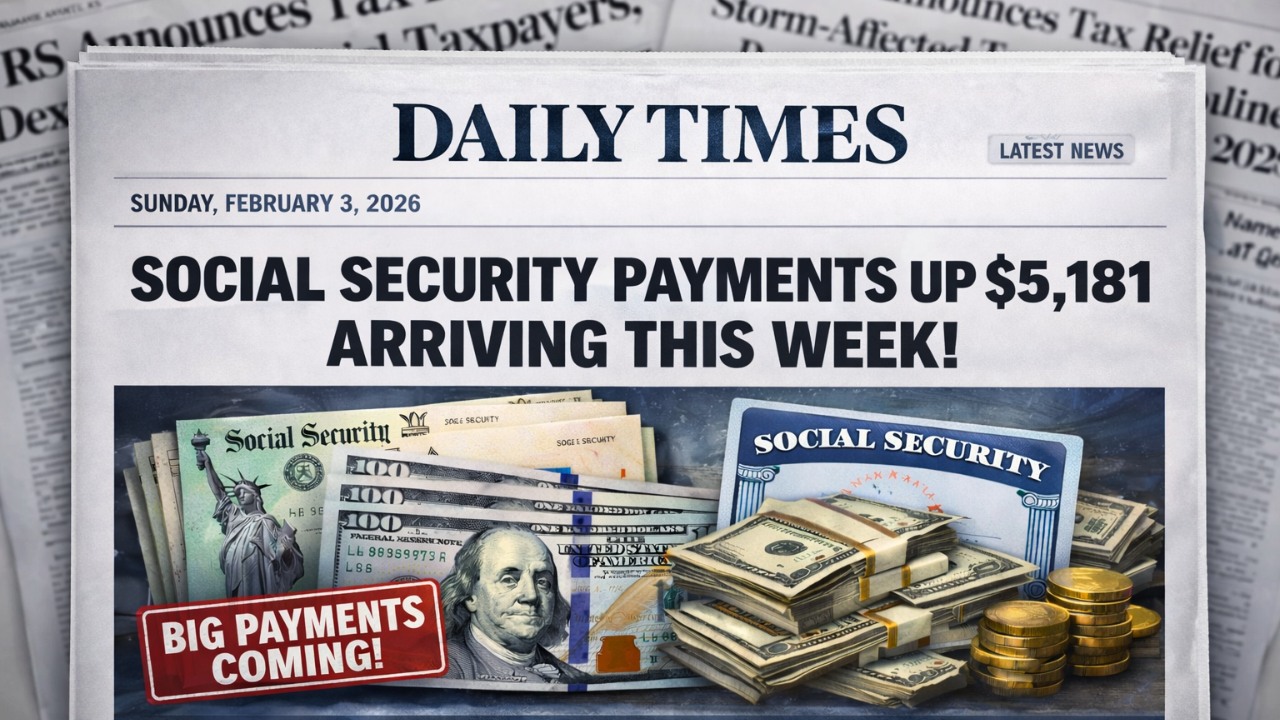
$5181 Social Security Payment: Social Security checks are landing in mailboxes and bank accounts this week, and for some retirees, the amounts are turning heads. A handful of beneficiaries are receiving payments as high as $5,181, a figure that sounds almost unreal compared to the average monthly benefit. Still, those eye-catching checks didn’t happen by accident.
Why Social Security Payments Are Going Out This Week
Social Security payments follow a predictable schedule tied to a beneficiary’s birth date. Instead of sending everyone a check at once, the Social Security Administration spreads payments across several Wednesdays each month.
People born between the 1st and 10th are paid early in the month. Those born between the 11th and 20th receive their money the following week. Meanwhile, beneficiaries born between the 21st and 31st are paid later in the month.
This staggered system keeps the payment process running smoothly. As a result, each week brings headlines about new deposits hitting accounts, especially when unusually large checks are involved.
The $5,181 Figure Explained
That $5,181 payment represents the maximum possible monthly Social Security benefit for someone who retired at age 70 after earning the highest taxable income for decades. It’s not a bonus, a special program, or a surprise adjustment.
Instead, it reflects how delayed retirement credits and consistently high earnings can dramatically increase a monthly check. Very few people qualify, but those who do reap a significant reward.

For most retirees, this number feels out of reach. Even so, it highlights the upper limit of what the system allows under today’s rules.
How Delaying Retirement Boosts Monthly Checks
Age plays a huge role in determining Social Security benefits. While people can start collecting as early as 62, doing so permanently reduces the monthly amount.
Waiting until full retirement age unlocks the standard benefit. Holding off even longer, up to age 70, adds delayed retirement credits that increase payments by roughly 8 percent per year.
That steady boost adds up fast. Someone who delays for several years can see a dramatically higher check for the rest of their life.
Lifetime Earnings Matter More Than Most People Realize
Another key factor behind those massive checks is earnings history. Social Security calculates benefits using your highest 35 years of income, adjusted for inflation.

Maxing out taxable earnings year after year is crucial. In 2024, income above $168,600 isn’t subject to Social Security taxes, and only earnings up to that limit count toward benefits.
People who consistently earned at or above the cap built a much stronger foundation for retirement payments. Combined with delayed claiming, this strategy produces the largest possible checks.
Who Actually Receives These Top Payments
Despite the buzz, only a tiny fraction of beneficiaries receive payments near $5,181. Most retirees fall well below that mark.
The average Social Security check hovers closer to the mid-$1,900 range. Many people worked in lower-paying jobs, took career breaks, or claimed benefits early due to health or financial needs.
High earners who delayed retirement represent a narrow slice of the population. Their checks are impressive, but far from typical.

Cost-of-Living Adjustments Add Another Layer
Annual cost-of-living adjustments, known as COLAs, also influence benefit amounts. These increases are tied to inflation and apply to everyone receiving Social Security.
Over time, COLAs can push already high benefits even higher. For someone who started with a large base payment, each adjustment compounds the effect.
That’s one reason maximum benefit figures continue to climb from year to year, even without changes to the underlying formula.
Why Some Checks Look Bigger Than Expected
In some cases, beneficiaries notice larger-than-usual deposits due to timing quirks or retroactive payments. Back pay for delayed claims or corrected records can create a temporary spike.
Others may see increased payments after recalculations tied to continued work. Social Security can adjust benefits upward if new earnings replace lower-earning years in the 35-year formula.

These bumps aren’t permanent jumps for everyone, but they can make a particular payment stand out.
Spousal and Survivor Benefits Add Complexity
Social Security isn’t limited to individual work histories. Spousal and survivor benefits introduce additional layers that can affect payment amounts.
A surviving spouse, for example, may receive up to 100 percent of a deceased partner’s benefit. If that partner had a very high payment, the survivor’s check could also be substantial.
While these benefits rarely hit the absolute maximum, they can still exceed what many retirees expect.
What This Means for Future Retirees
Seeing $5,181 checks can spark curiosity, envy, or motivation, depending on where someone is in their career. For younger workers, it’s a reminder that long-term planning matters.

Earning consistently, delaying retirement when possible, and understanding how benefits are calculated can make a meaningful difference later on. Even small decisions today can echo decades into the future.
At the same time, flexibility remains important. Health, family responsibilities, and job availability often shape retirement timing more than spreadsheets ever could.
The Bigger Picture Behind the Headlines
Those headline-grabbing checks tell only part of the story. Social Security remains a foundational income source for millions of Americans, not a path to luxury living.
For most retirees, the program provides stability and predictability, helping cover basics like housing, food, and healthcare. The rare maximum benefit highlights what’s possible, not what’s typical.
As payments continue rolling out this week, the buzz around high-dollar checks offers a useful reminder. Social Security rewards patience, consistent earnings, and long-term planning, but it still works best as one piece of a broader retirement puzzle.