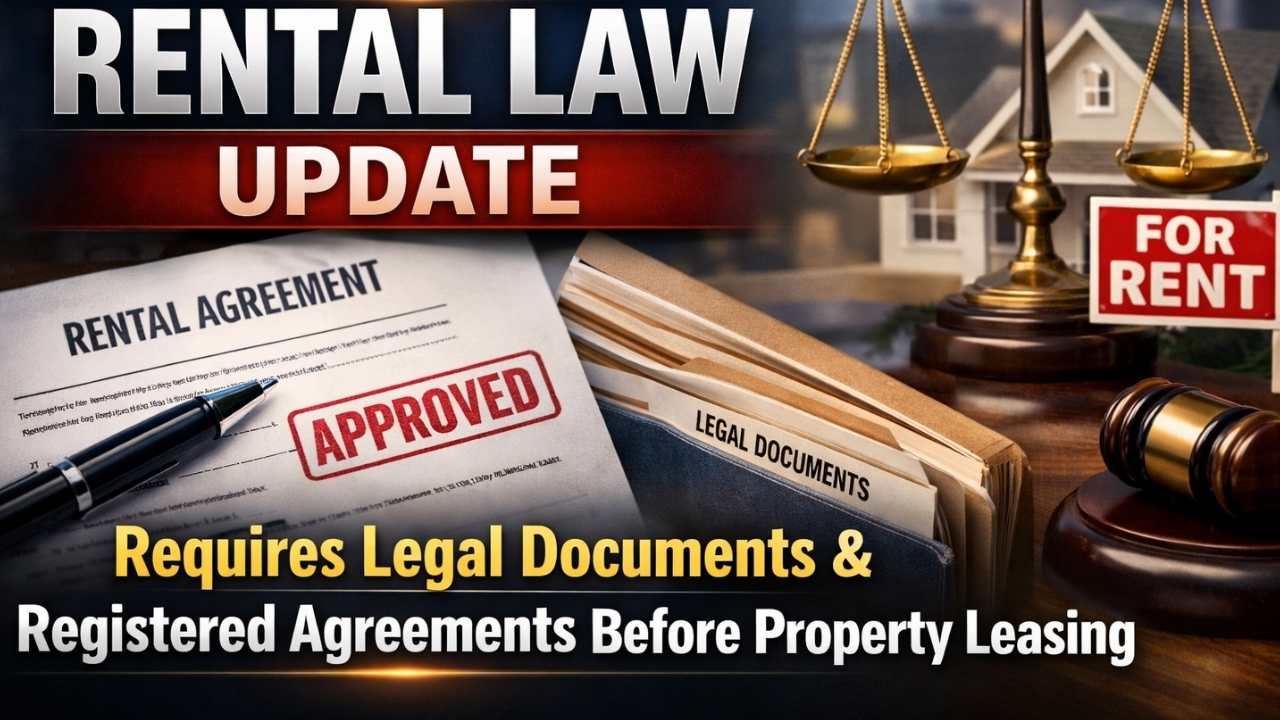
2026 Rental Law Update Requires Legal Documents: The rental housing sector is changing as new rules introduced around 2026 emphasize proper legal documentation before renting residential properties. These reforms aim to create transparency, reduce disputes, and protect both landlords and tenants. Formal agreements are becoming essential to ensure clear terms, secure payments, and legal protection for everyone involved.
Under these updated regulations, written and registered rent agreements are strongly encouraged and, in many cases, required. Digital registration, identity verification, and property documentation are now seen as standard practices. These changes help create a more organized rental system and make resolving conflicts faster and more efficient.
Legal Requirement For Registered Rental Agreements
The new rental framework encourages mandatory written agreements before renting out residential properties. Registration with the appropriate authority ensures that both landlord and tenant have legally recognized terms. This reduces misunderstandings and protects both parties from future disputes.
A registered agreement clearly outlines rent amount, deposit, duration, and responsibilities. Without proper documentation, agreements may not be legally valid in case of conflict. These changes encourage accountability and help maintain a structured rental environment.

Importance Of Digital Documentation In Rental Process
Digital documentation has become an important part of the modern rental system. Authorities are promoting online registration of rental agreements and digital stamp verification to create official records. This makes the process more secure and easier to access.
Online records also reduce paperwork errors and prevent fraudulent practices. Digital storage helps tenants and landlords quickly retrieve documents when needed. It also supports smoother legal procedures if any dispute arises in the future.
2026 Rental Law Update Requires Legal Documents: Overview Table
| Key Aspect | Details |
|---|---|
| Main Purpose | Ensure legal documentation before renting properties |
| Agreement Requirement | Written and registered rental agreement |
| Registration Timeframe | Often required within 60 days of signing |
| Documentation Needed | Identity proof, ownership proof, digital stamp |
| Legal Benefit | Stronger protection for tenants and landlords |
| Risk Without Registration | Possible penalties and weaker legal standing |
| System Type | Increasingly digital and trackable |
Required Documents Before Renting A Residential Property
Both landlords and tenants are expected to maintain proper documentation before entering into a rental arrangement. Identity proof, address proof, and property ownership records are commonly required to support the agreement.

Having complete documentation helps establish trust and ensures clarity in the rental process. These records serve as proof in case of disagreements and make it easier to resolve issues through proper legal channels.
Benefits For Tenants And Property Owners
Proper legal documentation protects tenants from sudden eviction and unfair rent increases. It ensures that rental terms are clearly defined and respected. Tenants feel more secure knowing their rights are supported by registered agreements.
Landlords also benefit from these rules by having clear legal proof of tenancy. It helps them manage payments, deposits, and property responsibilities more effectively. Documentation reduces the risk of conflicts and builds long-term trust.

Penalties And Risks Of Unregistered Rental Agreements
Renting a property without proper registration may reduce the legal strength of the agreement. In case of disputes, unregistered documents may not provide full protection in legal proceedings. This makes it difficult to prove rental terms.
Some systems also introduce fines or penalties for failing to register agreements. These measures encourage compliance and ensure that rental practices remain transparent. Proper registration protects both parties from unnecessary legal complications.
Security Deposit And Rent Regulation Updates
Recent rental changes also focus on controlling excessive security deposits. In many cases, deposits are expected to remain within reasonable limits to prevent financial pressure on tenants. This promotes fair access to housing.

Clear rules about rent increases are also becoming more common. Written notice and documented agreements help ensure that rent adjustments are fair and predictable. This makes the rental system more balanced and trustworthy.
How Documentation Reduces Rental Disputes
Written and registered agreements make it easier to solve disputes. Clear records of rent terms, payment schedules, and responsibilities help avoid confusion between tenants and landlords. This promotes mutual understanding.
Legal documentation also helps authorities review cases faster. When records are properly maintained, it becomes easier to settle disagreements through formal processes. This reduces stress and ensures fair outcomes for both sides.

Role Of Online Portals In Rental Agreement Registration
Online portals are making rental agreement registration simpler and more accessible. Landlords and tenants can submit details, upload documents, and complete registration without lengthy physical procedures.
These systems improve efficiency and keep records organized. Digital tracking helps verify agreements and reduces the risk of lost documents. This approach supports a modern and reliable rental environment.
Future Impact Of Legal Rental Documentation Rules
The push for proper documentation is expected to improve trust in the rental market. Tenants will feel safer, and landlords will have stronger protection for their properties. This balance supports a healthier housing system.
Over time, increased transparency and digital systems may reduce illegal rentals and informal agreements. A well-documented rental market encourages fairness, legal compliance, and long-term stability in the housing sector.