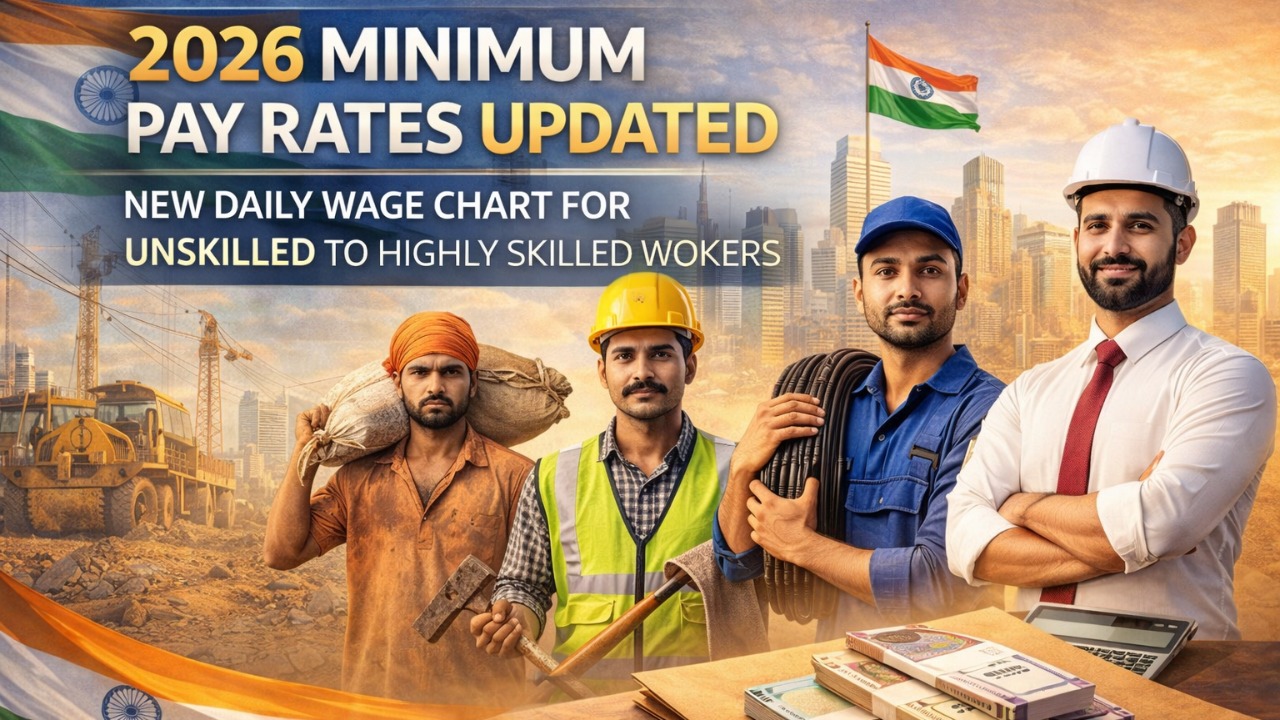
2026 Minimum Pay Rates Updated: The 2026 Minimum Pay Rates update introduces revised wage structures aimed at improving income security for workers across multiple employment sectors. The government periodically reviews minimum wages to reflect inflation, cost of living changes, and economic growth. The updated wage structure is designed to ensure fair compensation for workers based on their skill levels and job responsibilities.
The revised minimum wage system benefits workers in construction, manufacturing, services, agriculture, and unorganized sectors. The update focuses on improving financial stability for labourers while ensuring employers maintain standardized wage compliance across industries.
Purpose Of Minimum Pay Rate Revision In 2026
The minimum pay rate revision aims to protect workers from wage exploitation and ensure they receive fair income according to their skills and work intensity. The 2026 revision considers rising living expenses, housing costs, food prices, and transportation expenses faced by workers across the country.
The updated wage structure also aims to reduce income inequality by improving earnings for unskilled and semi skilled workers. It supports labour welfare policies while encouraging better workforce productivity and economic stability.
Worker Skill Categories Under Minimum Wage Structure
Minimum wage policies classify workers into different skill levels based on experience, training, and job complexity. Each category receives wage rates according to job responsibilities and skill requirements.
The four main skill categories include:

- Unskilled workers performing basic manual tasks
- Semi skilled workers with limited technical training
- Skilled workers with professional or technical expertise
- Highly skilled workers performing advanced specialized tasks
This classification ensures fair wage distribution based on individual work capability.
2026 Minimum Pay Rates Overview
| Worker Category | Estimated Daily Wage Range |
|---|---|
| Unskilled Workers | ₹375 to ₹450 per day |
| Semi Skilled Workers | ₹420 to ₹520 per day |
| Skilled Workers | ₹520 to ₹650 per day |
| Highly Skilled Workers | ₹650 to ₹800 per day |
The revised wage ranges may vary slightly depending on state policies, industry sectors, and regional cost of living adjustments.
Wage Benefits For Unskilled Workers
Unskilled workers perform basic labour activities that require minimal training or formal education. These workers typically work in construction sites, agriculture fields, loading operations, and cleaning services. The 2026 wage update provides increased daily income support for this category to help manage rising living expenses.
Higher minimum wages for unskilled workers aim to improve living standards and reduce poverty among labour dependent households. The revision ensures these workers receive fair compensation for physically demanding work environments.
Income Improvements For Semi Skilled Workers
Semi skilled workers perform jobs that require basic technical knowledge or limited vocational training. This category includes machine helpers, drivers, factory assistants, and technicians with entry level skills.

The updated 2026 wage structure provides improved pay rates to encourage skill development and workforce training participation. Semi skilled workers benefit from increased earning opportunities and improved job stability across industrial sectors.
Salary Growth For Skilled Workers
Skilled workers possess technical training, professional certifications, or specialized job expertise. This category includes electricians, plumbers, mechanics, machine operators, and technical service professionals. The revised minimum pay rates ensure skilled workers receive wages that reflect their expertise and professional contribution.
Higher minimum wages for skilled workers help promote vocational education and skill development programs. The updated structure also supports career growth opportunities and improves workforce productivity across industries.
Earnings Structure For Highly Skilled Workers
Highly skilled workers perform advanced professional or technical roles requiring significant experience, certification, or specialized knowledge. This category includes engineers, advanced technicians, supervisory professionals, and specialized industrial operators.
The 2026 wage update introduces improved income standards for highly skilled workers to reflect their expertise and job responsibility levels. Higher pay rates encourage advanced skill training and improve employment retention across technical industries.

Regional And Sector Based Wage Variations
Minimum wage rates may vary depending on state level labour policies and industry sector classifications. Urban areas typically offer slightly higher wage rates due to increased cost of living, while rural areas may have region specific wage adjustments.
Certain industries such as construction, manufacturing, transportation, and mining may also provide additional wage allowances based on job risk and work environment. Regional flexibility ensures wage structures remain practical and economically sustainable.
Additional Worker Benefits Beyond Minimum Wage
Many labour policies also include additional financial benefits beyond basic daily wages. These benefits aim to improve worker welfare and provide financial protection.
Common additional benefits may include:
- Overtime payment for extended working hours
- Health insurance and social security coverage
- Paid leave and holiday wage protection
- Safety equipment and worksite protection benefits
- Provident fund and retirement savings contributions
These benefits support overall worker financial stability and improve workplace safety standards.

Impact Of Minimum Wage Increase On Worker Living Standards
The 2026 wage revision helps workers manage rising costs related to food, housing, healthcare, and transportation. Improved daily wages allow workers to support family expenses and improve quality of life.
Higher income levels also help workers invest in education, skill training, and healthcare, contributing to long term economic growth. The wage update supports labour welfare and strengthens workforce participation across industries.
Employer Responsibilities Under Updated Wage Rules
Employers are required to follow updated minimum wage regulations and ensure timely salary payments to workers. Labour laws mandate proper wage documentation, payment transparency, and compliance with working hour regulations.
Employers must also provide safe working conditions, workplace insurance coverage, and legal employment documentation. Compliance with wage regulations helps maintain fair labour practices and supports ethical employment standards.
Government Monitoring And Labour Welfare Enforcement
Labour authorities regularly monitor wage compliance through inspections and employer reporting requirements. The government implements penalties for wage violations and encourages worker awareness programs to promote labour rights.

Worker grievance systems allow employees to report wage disputes and seek legal assistance. Monitoring and enforcement measures help maintain fair wage distribution and protect worker rights across employment sectors.
Future Wage Policy And Labour Welfare Goals
The government continues to review wage structures periodically to ensure fair compensation aligned with economic growth and inflation trends. Future labour policy reforms may focus on improving social security coverage, expanding skill development programs, and strengthening workplace safety regulations.
These initiatives aim to create a balanced labour market that supports both workforce welfare and industrial productivity growth.
Conclusion
The 2026 Minimum Pay Rates update provides improved daily wage standards for unskilled, semi skilled, skilled, and highly skilled workers. The revised wage structure supports labour welfare, improves income stability, and encourages skill development across employment sectors.
By ensuring fair compensation and strengthening worker protection policies, the updated minimum wage system plays an important role in improving living standards and supporting economic stability for millions of workers across the country.