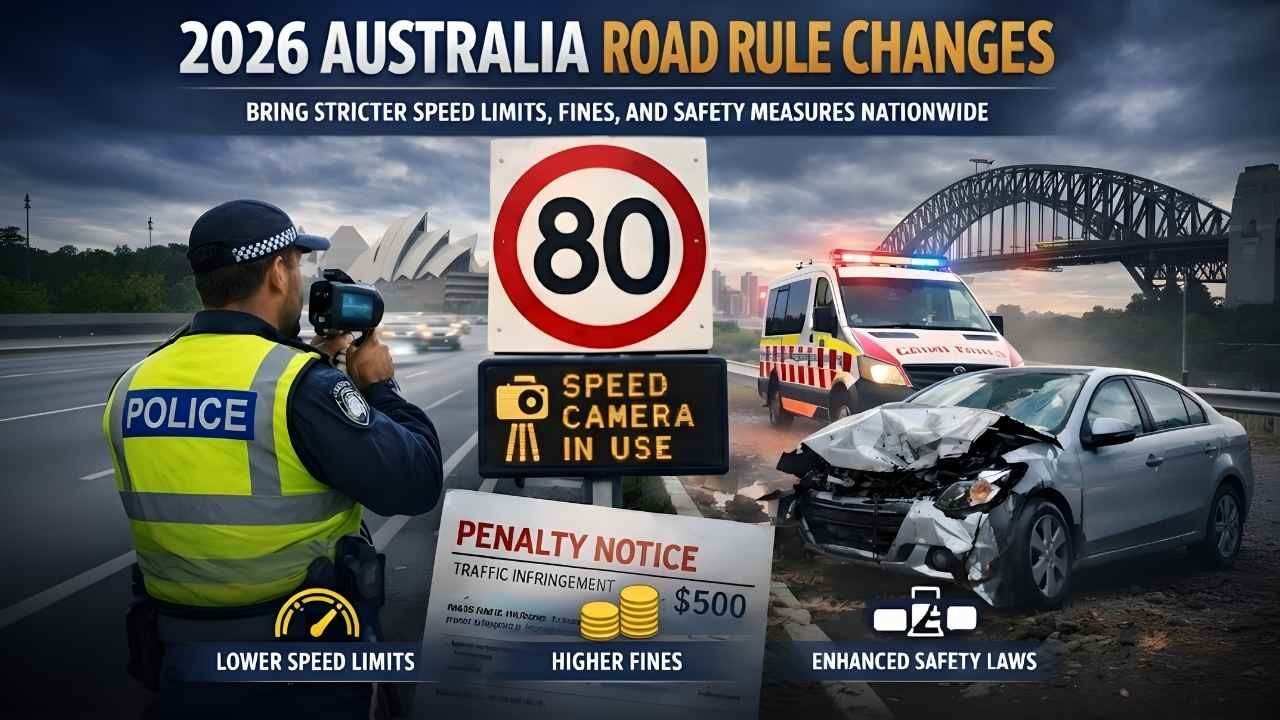
2026 Australia Road Rule Changes: Australia introduced several important road rule changes in 2026 to improve safety, reduce accidents, and encourage responsible driving. These updates focus on speed control, licensing, penalties, and modern enforcement technology across different states and territories.
Drivers are expected to follow stricter rules related to mobile phone use, school zones, and health checks for older motorists. These changes aim to reduce road deaths and injuries, which still affect thousands of people every year across the country.
New Speed Limit Adjustments Across Urban Areas
Several cities have reduced speed limits in busy areas from 50 km/h to 40 km/h. In high-risk locations, some zones now operate at 30 km/h to improve pedestrian safety. These changes are mainly focused on residential streets and crowded town centers.
Authorities believe slower speeds can reduce crash severity by nearly 40 percent. Lower speed limits also provide drivers with more time to react to sudden hazards, especially near intersections and pedestrian crossings.

Stronger Enforcement Through AI Camera Technology
Australia has increased the use of AI-based cameras to monitor drivers. These systems can detect mobile phone use, seatbelt violations, and speeding more accurately than traditional methods.
In many regions, thousands of cameras have been installed on major highways and city roads. This has helped authorities catch more offences and improve compliance without increasing manual police checks.
2026 Australia Road Rule Changes Overview
| Key Area | Major Change | Figures and Details |
|---|---|---|
| Speed Limits | Reduced in busy areas | 50 km/h lowered to 40 km/h or 30 km/h in select zones |
| School Zones | Expanded coverage | 40 km/h during school hours |
| Senior Drivers | Health checks required | Assessments often begin from age 75+ |
| Mobile Phone Use | Stricter penalties | Fines can exceed AUD 1,000 with demerit points |
| AI Cameras | Increased enforcement | Thousands installed across states |
| Overseas Licences | More testing rules | Written and practical tests required in some cases |
| Road Safety Goal | Reduced accidents | Focus on lowering injuries and deaths |
Expanded School Zone Safety Measures
School zones across Australia now operate with stricter speed rules during peak hours. Most areas enforce a 40 km/h limit when children are arriving or leaving school.

These measures aim to reduce accidents involving young pedestrians. Studies show lower speeds in school areas can reduce injury risks by nearly half, making roads safer for students and families.
Tougher Penalties for Dangerous Driving
Authorities have increased fines for offences such as speeding, reckless driving, and running red lights. In serious cases, penalties may exceed AUD 1,000 and include licence suspension.
Stricter penalties are designed to discourage risky behavior. Officials believe stronger enforcement will reduce repeated offences and improve long-term road safety awareness.

Strict Mobile Phone Usage Restrictions
Using a handheld phone while driving is now heavily restricted across all states. Even checking messages at traffic lights can lead to penalties in many regions.
Distracted driving is linked to a large percentage of crashes each year. By reducing phone use behind the wheel, authorities aim to lower accident rates and improve driver focus.
New Rules for Older Drivers
Drivers aged 75 and above may need regular medical checks to keep their licences. In some cases, annual health assessments become mandatory after age 80.

These evaluations focus on vision, reaction time, and overall fitness to drive. The goal is to protect both older drivers and others on the road without removing independence unnecessarily.
Changes Affecting Overseas Licence Holders
Some states now require certain foreign licence holders to pass local theory and practical driving tests. This ensures all long-term residents understand Australian road rules.
These rules help standardize driving skills and knowledge. Authorities believe this will reduce confusion and improve safety among new residents and visitors.

Focus on Reducing Road Fatalities
Australia continues to work toward lowering road deaths and serious injuries. Each year, more than 1,000 fatalities occur nationwide, highlighting the need for stronger safety measures.
New rules are part of a long-term national strategy. The aim is to make roads safer through education, stricter enforcement, and improved infrastructure.
Impact on Daily Driving Habits
Drivers may notice more signs, cameras, and enforcement checks across cities and highways. Daily travel routines may require more attention to speed and distractions.
Although the changes may feel strict at first, they are meant to build safer habits. Over time, these updates can lead to fewer crashes and a more secure driving environment for everyone.